Insurance Enforcement at Dispatch for Delivery Contractor Networks
Liability attaches at dispatch, not at hire—real-time insurance checks close the gap.
Liability for a delivery contractor's conduct attaches the moment a company dispatches that contractor, not the moment it collects a proof-of-insurance document. A COI filed at onboarding tells you nothing about whether coverage is still active three weeks, three months, or three dispatches later. Bulk occupational accident insurance, bought through the platform and paired with real-time coverage checks at the point of dispatch, is how delivery networks running a large number of contractors close that gap and cut per-contractor insurance costs at the same time. The rest of this piece explains why that structural timing problem exists, what closes it, and what it costs to ignore.
The moment of dispatch as the actual moment of liability
WUD insurance exists because a driver's personal auto policy stops covering them the moment they go on duty for a delivery platform. Personal auto coverage is written for personal use. Once a driver accepts a dispatch assignment and starts working a route, that policy's exclusions for commercial activity kick in, and the gap it leaves open is the reason WUD coverage exists as a distinct insurance category.
The liability framework built around this gap does not leave much room for interpretation. When a driver is under dispatch, the company that driver represents is generally responsible for that driver's actions, regardless of independent contractor status, for as long as a valid lease agreement is in place. Independent contractor status does not erase the liability; it just changes who absorbs it on paper versus who absorbs it in practice. The company's exposure turns on dispatch status, not on employment classification.
That timing detail is what makes onboarding paperwork insufficient on its own. A COI collected at onboarding proves a contractor had valid coverage on the day the document was signed. It tells you nothing about whether that coverage is still active today, next week, or during the run where something goes wrong. A contractor can carry a clean policy on day one and let it lapse eight weeks later for any number of reasons: missed premium, policy cancellation, a carrier non-renewal. Without a system watching for that lapse continuously, a platform usually finds out about it the same way it finds out about most insurance problems: after a claim has already been filed.
The onboarding COI's liability trap
The failure here is a structural property of how most onboarding processes are designed to handle insurance documents.
Standard onboarding collects a COI, checks it once, and files it. That single verification gets treated, functionally, as proof of ongoing compliance, when it's really a snapshot that starts going stale the moment it's filed. Insurance policies lapse. They get cancelled for non-payment. They don't get renewed. They get downgraded to coverage levels below what the platform requires. If nothing specifically triggers a re-check, none of that reaches the platform.
Most networks try to manage this with periodic audits, quarterly passes or annual re-verification cycles. Those audits still leave open windows, sometimes stretching for months, where a lapse can sit undetected. If a contractor's coverage lapses in month two of a quarterly audit cycle and a claim gets filed in month three, the platform is left holding a liability it has no documented basis for having checked at the moment the incident occurred.
Compliance management that actually functions goes past collecting paperwork once. It requires a system that watches expiration dates on an ongoing basis, flags lapses automatically, and builds a timestamped record proving the platform was paying attention. Courts evaluating these cases look for documented evidence of monitoring, not a company's word that it meant to keep checking. Contractor management platforms designed for delivery networks, like GigSafe, automate that monitoring loop, checking insurance status in real time and keeping the audit trail that shows compliance diligence at the moment of dispatch, not just at the moment of hire. That audit trail is the whole defense. Its absence is the exposure.
What real-time insurance enforcement at dispatch requires
Continuous monitoring means a platform is checking, automatically and in real time, whether each contractor's insurance is currently active, rather than whether a document was uploaded at some point in the past. That distinction, checking status versus checking history, is what separates a live compliance system from a filing cabinet with a reminder app attached.
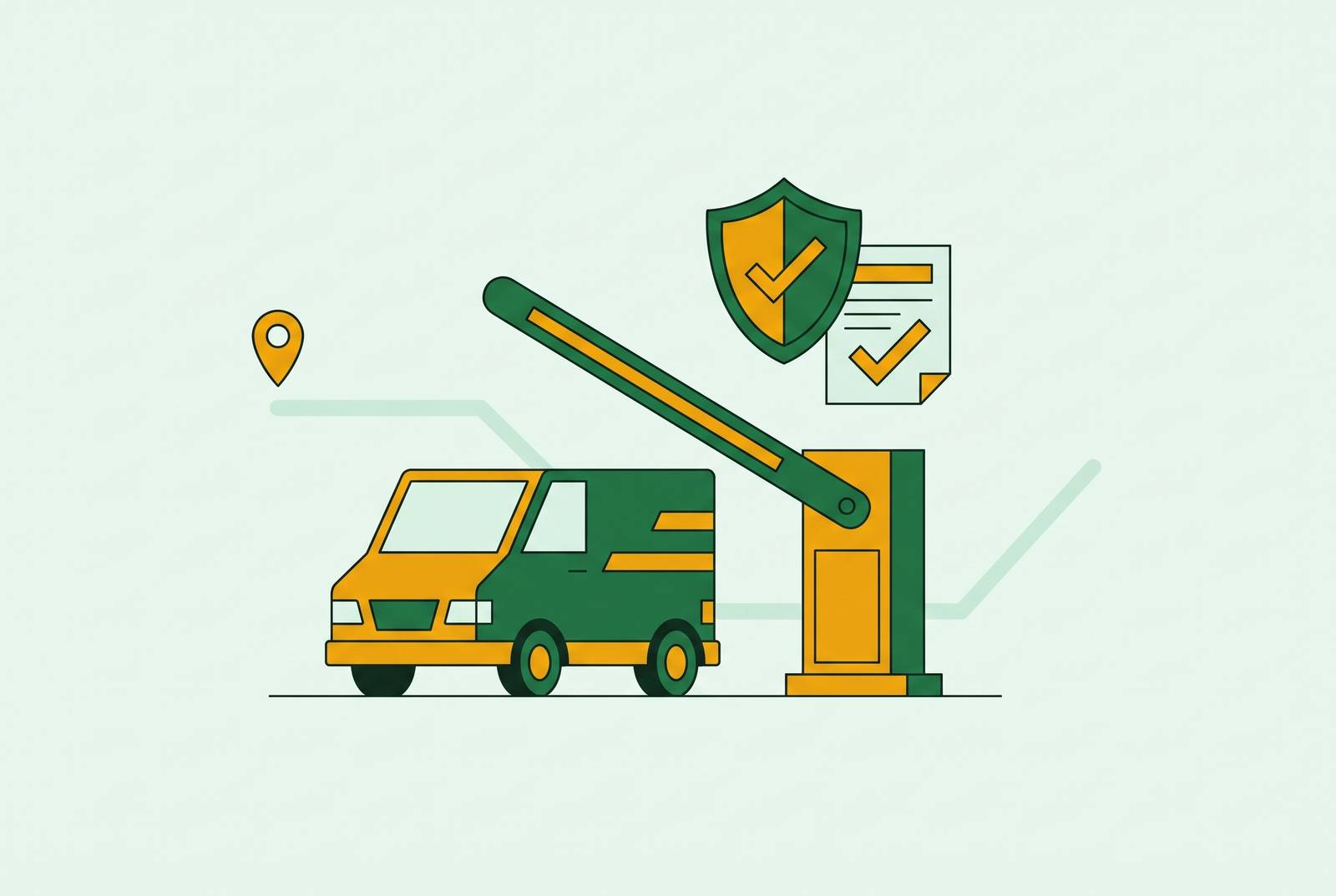
The dispatch trigger is where that monitoring turns into enforcement. If coverage lapses, the contractor cannot get a dispatch assignment until the coverage is confirmed active again. The system blocks the assignment automatically; no back-office employee has to notice the problem, flag it, and manually withhold the job. That automation matters because a compliance queue that still requires a human to review it before anything happens is the same periodic auditing model running on better software.
So scaling this takes paperless controls, ones that centralize driver qualification files, insurance status, expiry alerts, and compliance exceptions into one place a dispatcher or system can check instantly. When you centralize insurance status into that same workflow, you cut the per-contractor cost of managing coverage, and you make sure it's active exactly when dispatch happens. Policies send automated notifications, SMS and email nudges as a policy nears expiration, so the contractor carries the burden of renewal, and the platform keeps a documented record that it warned the contractor before any lapse occurred.
One more distinction matters here: insurance coverage for delivery contractors isn't one product. For independent-contractor delivery networks, you need occupational accident insurance as the standard coverage, not workers' compensation. Workers' comp generally isn't required, or even appropriate, for properly classified independent contractors, and if you extend it to them, you can create misclassification exposure, a tension the next sections take up directly.
The insurance products built for the while-under-dispatch window
WUD insurance is built for gig economy and on-demand platforms, and it covers drivers, parcel delivery personnel, and shoppers during the exact window when your personal auto coverage stops applying. Great American Insurance Group brings more than 20 years of occupational accident expertise to the on-demand workforce market, and it has dedicated in-house claims staff and coverage structures built to flex around how gig platforms actually operate.
That flexibility is visible most clearly in rating structure. OAI can be priced by the mile, delivery, task, hour, or month, letting coverage track actual dispatch activity instead of locking a contractor into a flat policy period that doesn't match how gig work is actually performed. Some OAI structures can also factor in a contractor's earnings across every platform they work on when they calculate disability benefits, which matters because so many delivery contractors run multiple apps at once.
What OAI covers, and what it doesn't, needs to be spelled out clearly. Most OAI policies cover acute injury only, not occupational disease, and contractors frequently don't know the difference until they file a claim and find out the hard way. That knowledge gap makes clear, platform-side documentation of coverage terms a requirement, not a nice-to-have. For a network running hundreds of contractors, the cost of this coverage also scales differently depending on how it's purchased. Bundling occupational accident insurance into the same system that already monitors compliance status lets a network buy coverage at group rates rather than leaving each contractor to find individual policies on the open market, and platforms built specifically for 1099 delivery networks can combine that bulk purchasing with the enforcement architecture described above, delivering both compliance and a substantial reduction in real savings on the insurance itself.
The misclassification tightrope: how continuous monitoring can create the risk it is meant to manage
The same enforcement mechanism that closes the insurance gap can, handled carelessly, open a different one. Gating dispatch on compliance status increases a platform's control over when and how a contractor gets to work, and control is the exact fact pattern that misclassification claims are built on.
In late 2026, operators work under three legal standards at once, and none of them is final. The 2024 DOL rule remains operative for private lawsuits even though it's the stricter of the three. The DOL itself has applied a more lenient standard since May 2025. And a proposed rule from February 2026 would replace the 2024 framework with a simpler economic reality test built around two dominant "core" factors, with three secondary factors still in the mix. None of these three has settled into a final answer, and operators building compliance systems today are building them against a target that's still moving.
Transportation and delivery companies do get some relief under the newer federal analysis: reclassification risk is generally lower there than in other gig sectors. But federal relief doesn't erase state exposure. California's ABC test presumes employee status unless a company can satisfy all three prongs, so the bar is hard to clear. New Jersey also adopted clarifying regulations on its own ABC test, effective later in 2026, so operators need to track it separately from the federal picture.
The way through this tension is deliberate design. Conditioning dispatch access on a verified insurance credential is categorically different from telling a contractor how to drive, when to drive, or which route to take. Enforcing a compliance prerequisite isn't the same as directing labor, but that line has to be drawn deliberately, in the contract language, in the platform's policies, and in how the system itself is built. Requiring active insurance is a condition of platform access, the same as requiring a valid license. It's not an instruction about how the work gets done. The enforcement touchpoint is the credential, not the conduct, and that distinction is what keeps a compliance system from quietly becoming an employment relationship.
State law on contractor-level insurance
In some states, a platform cannot simply choose how it enforces insurance at dispatch. In some of the markets where delivery contractor density is highest, state legislatures have already settled the question, and they haven't settled it the same way.
Washington took an entirely different path from the OAI model. The state requires workers' compensation, not occupational accident insurance, for ride-share drivers while they're on dispatch platform time and passenger platform time. That's a legislature imposing workers' comp directly onto workers who remain classified as independent contractors in every other respect, which is a reminder that state law can override whatever coverage model a platform has built its operations around.
California and Washington arrive at two completely different statutory answers to essentially the same underlying question: what does a state owe a gig worker who gets hurt on the job. Neither answer is going away, and neither one tracks the federal classification framework discussed above. So a platform running contractors in both states cannot apply one insurance rule nationwide. The coverage type verified at dispatch has to match the specific statutory requirement of the state where the work is actually happening. The compliance system itself needs to know which state a dispatch is occurring in before it decides what "compliant" even means for that assignment.
Broker and platform liability and the financial stakes of verification failures
Courts have started holding platforms and brokers financially responsible for failing to verify contractor insurance and operating authority before dispatch, not just at the point of signing a contract. That shift turns a compliance gap into a balance-sheet risk.
Many company liability policies explicitly exclude claims involving independent contractors, particularly ones who don't carry their own valid insurance or who haven't been added as additional insureds on the platform's own policy. A platform that never confirmed a contractor's coverage at the moment of dispatch can find out, after a claim lands, that its own policy doesn't respond to it either. That's two coverage gaps stacking on top of each other at the worst possible moment.
Contractors who aren't covered by workers' compensation and who get hurt on the job retain the right to sue the platform directly. Occupational accident insurance reduces that exposure but doesn't eliminate it, and a lapsed OAI policy at the exact moment of an injury erases the reduction, leaving the platform facing the same direct liability it would have had with no insurance program. Verdicts in these cases have trended substantial enough that the financial argument for automated monitoring now stands on its own, separate from the compliance argument. Automation swaps out periodic human review, which leaves gaps in the audit trail by design, for continuous, timestamped verification, and that's what courts look for when they weigh whether a platform exercised reasonable diligence.
Building a compliant dispatch trigger into contractor operations at scale
Everything above points toward one operational conclusion: insurance enforcement at dispatch only holds up at scale when it's fully automated. Manual review cannot keep pace with contractor volume, the frequency of policy expirations, or the patchwork of state-specific coverage rules described earlier.
A working enforcement system needs four pieces operating together. Continuous document monitoring gives you real-time visibility into coverage status across every active contractor. Automated expiration alerts reach the contractor before a lapse happens, not after. A dispatch gate blocks any assignment where coverage status isn't confirmed. And a timestamped audit trail records every verification event, so you build the documented history that matters if a claim ever gets challenged in court.
The math on manual compliance breaks down fast. A coordinator checking spreadsheets can keep up with a few dozen contractors. Past a few hundred, the volume of expirations, renewals, and state-specific coverage rules outpaces what any manual process can track reliably. That is why purpose-built compliance software has become standard practice at delivery scale. Onboarding is where this infrastructure gets built correctly. Insurance credentials, identity verification, and the monitoring connection itself need to happen in the same workflow as credentialing and payment setup, not as a separate task some back-office employee gets to eventually.
Pay speed turns out to be a genuinely effective enforcement lever in its own right. Contractors who get same-day ACH or instant debit as a reward for verified compliance status have a direct financial reason to keep their coverage current, because the platform's compliance standard becomes the gate they have to clear to get paid faster. The Under Dispatch liability framework makes clear why this all has to anchor at the dispatch moment specifically: a company is generally responsible for a dispatched driver's actions the instant that driver is assigned, regardless of when onboarding happened to occur. That is why real-time verification at dispatch, rather than one-time collection at onboarding, has to be the structural backbone of any contractor network operating at real scale.
GigSafe's platform brings real-time compliance monitoring, occupational accident and commercial auto insurance, and automated payments together in one system, built with more than 25 onboarding modules and automatic SMS and email nudges to keep contractors compliant on an ongoing basis, for 1099 networks running last-mile delivery and regulated logistics. The advantage of running this as one integrated system rather than a collection of separate tools comes down to a simple fact: every component shares the same compliance data, so the dispatch gate is checking real-time status, not a record cached somewhere else that may already be out of date by the time anyone looks at it.