Occupational Accident Claim Filing Process for 1099 Delivery Drivers
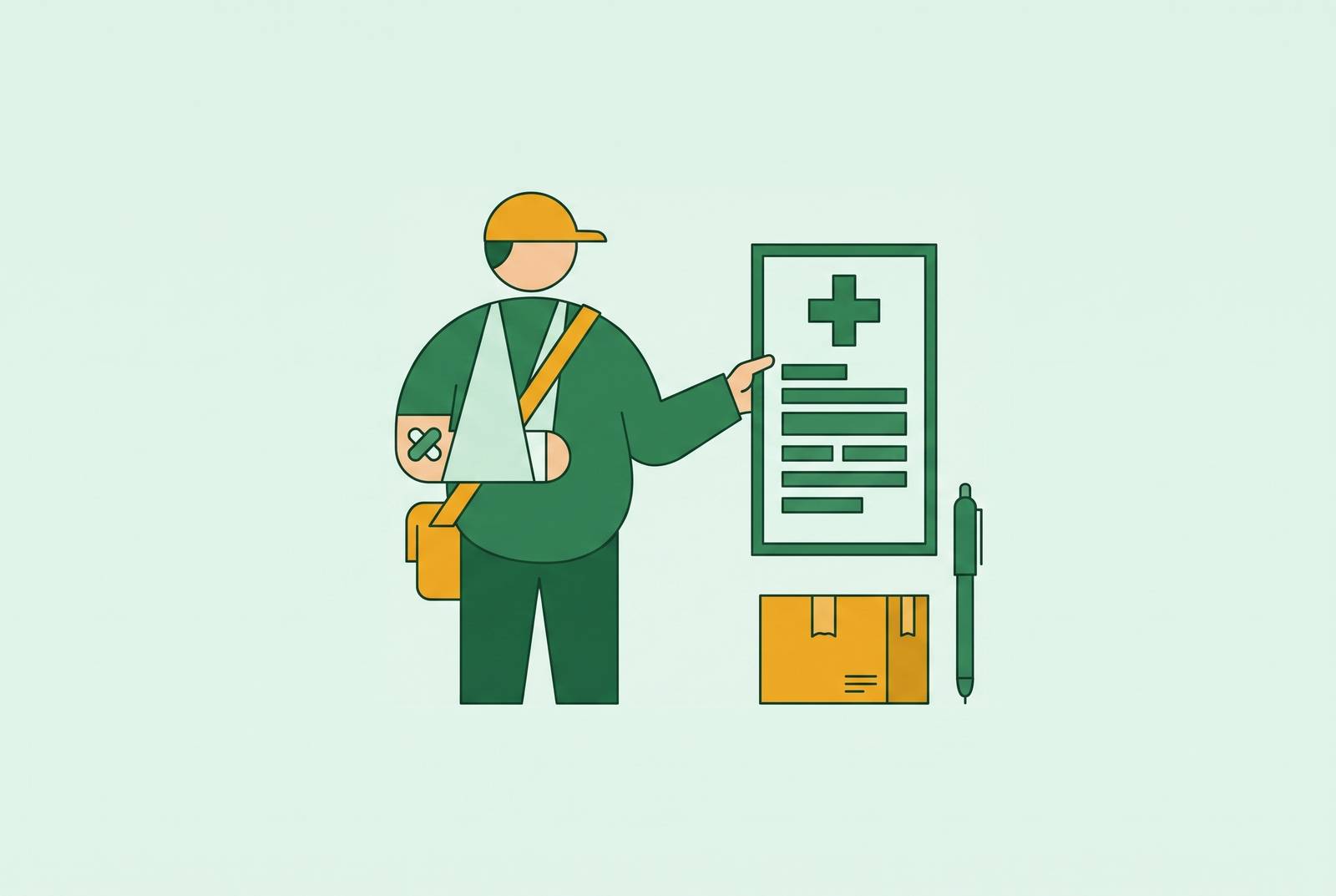
Filing an occupational accident insurance claim as a 1099 delivery driver is not a simplified version of workers' compensation. It is a separate system with its own trigger, its own evidence requirements, and its own payout limits. A valid claim pays out only if you know how that system works, from the moment an incident occurs through benefit disbursement.
Why 1099 delivery drivers face a fundamentally different injury claim system than W-2 workers
The insurance framework a delivery driver can access after an injury is determined entirely by their classification as a 1099 independent contractor. Not by the platform they work for. Classification is the whole game, and it sets up a structural split that most drivers only discover after a crash.
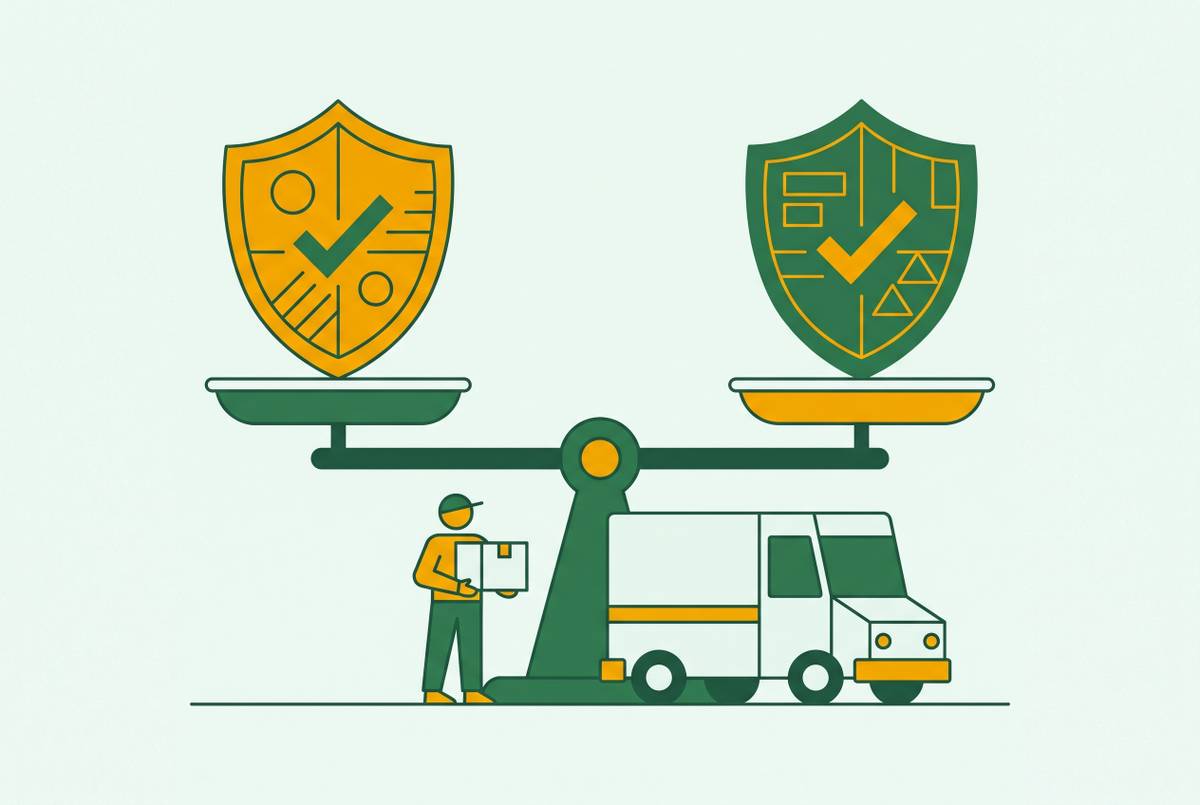
Workers' compensation is state-mandated and built for W-2 employees. It carries unlimited medical benefits in most states, which sounds generous until one considers why platforms do not extend it to contractors. Extending workers' comp to a 1099 driver can signal or confirm an employment relationship, and that is the exact fact pattern misclassification suits are built on. A platform that hands a contractor a workers' comp policy has, in the eyes of many courts, just admitted the contractor was an employee all along. Contractors can in some circumstances still sue the platform directly, and benefit caps mean a catastrophic injury can exhaust the policy faster than expected.
California made this split explicit when voters passed Proposition 22. The California Supreme Court upheld the measure in Castellanos v. State of California on July 25, 2024, codifying a rule that most app-based delivery drivers in California cannot file a workers' comp claim. The same driver making the same delivery under a different classification ends up in an entirely different claim system, with different paperwork, different deadlines, and different money at the end.
One delivery company's main program offers a structural exception that makes the split vivid. Amazon DSP does not use independent contractors for its delivery routes. Those drivers are W-2 employees of the DSP and covered by workers' comp. But Amazon's separate Flex program does use 1099 independent contractors for delivery. The accident is identical. The system is not.
How "engaged time" determines whether an OAI claim is valid before it is ever filed
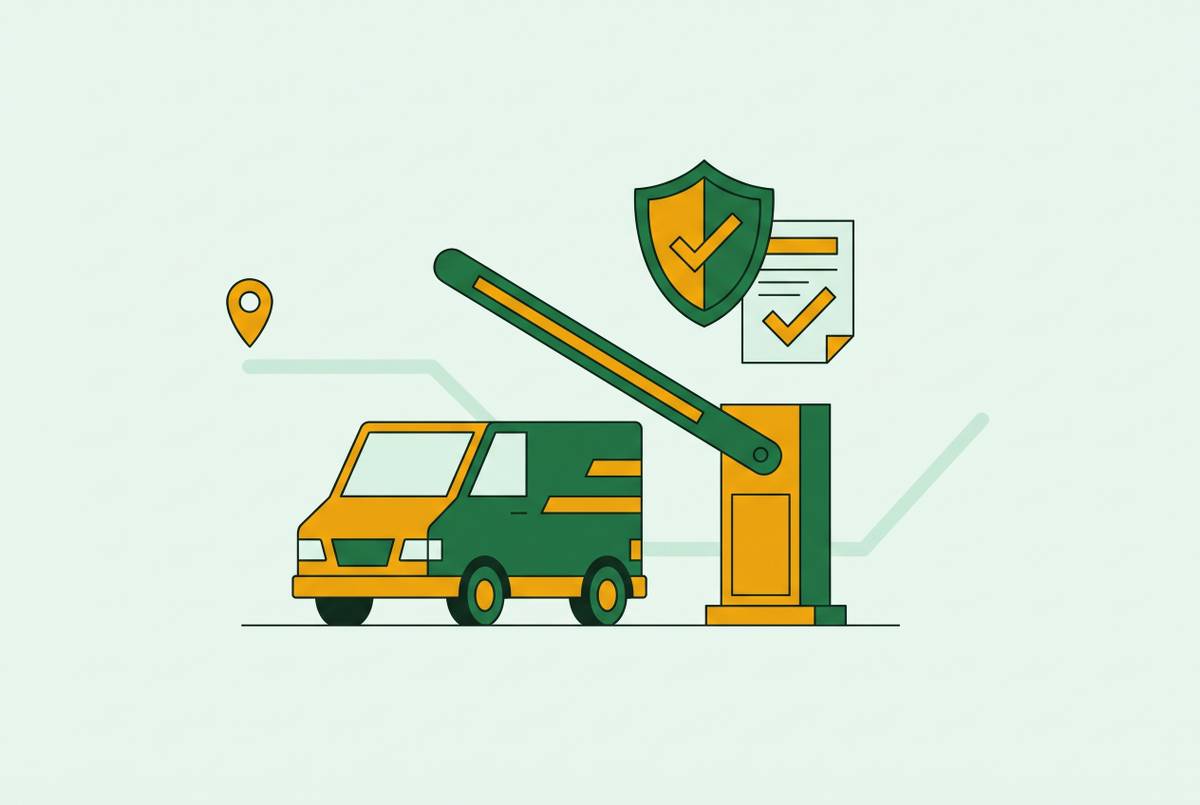
Engaged time is the linchpin of every OAI claim. It is the window that begins the moment a driver accepts a delivery request and ends the moment they complete it. Coverage applies within that window. An injury outside it is generally not covered under the platform's OAI policy, no matter how sympathetic the circumstances. The same slip at a restaurant pickup counter during an active delivery is.
Three scenarios determine coverage, and they are worth internalizing before an incident rather than after. Scenario two: order accepted through delivery completed. Platform OAI and commercial auto liability are active. This is the window that matters for an OAI medical or disability claim. Few insurers will write a policy that covers this gap.
The practical implication is blunt. App logs and GPS data, not a driver's own account of when they were working, are the primary evidence that establishes whether a claim falls inside or outside the covered window. The app timestamps will settle the question in seconds. Understanding engaged time before an incident is what makes the filing steps that follow executable rather than an exercise in hoping the insurer agrees.
What to do in the first minutes and hours after an incident
The most recoverable mistakes in an OAI claim happen in the first hours. The evidence that establishes engaged time is time-sensitive, and the platforms' internal reporting deadlines are often shorter than drivers expect. The hours after a crash are when drivers close apps, refresh screens, or mark orders complete, and in doing so destroy the exact timestamps an adjuster will later demand.
Step one is medical care. Visionary Law Group emphasizes this as a priority action, though injury assessment and calling 911 come first. A driver who postpones a hospital visit to photograph a bumper is not helping their claim. A driver who gets care and photographs the bumper, or has someone else photograph it, is.
Step two is preserving app status immediately. Screenshot the app showing the accepted order, acceptance time, pickup and delivery timestamps, and navigation route before you close or refresh. The instinct to tidy up the interface after a crash is exactly wrong. The messy, mid-delivery screen is the most valuable document in the claim.
Step three is documenting the scene. Photos and video of the scene, vehicle damage, injuries, road conditions, and any signage. If a crash occurred, request the police report number and officer contact information at the scene. Collect witness names and contact information if available. None of this requires a forensic background, just a phone that still works.
One further point matters from the first moment. Keeping the account of the incident consistent across all records is not a bureaucratic nicety. It is how claims survive an adjuster's scrutiny.
The complete evidence package required to support an OAI claim
An OAI claim's outcome depends on whether the driver can reconstruct the engagement window and the injury's circumstances from documentation. The insurer will scrutinize each element against the others, looking for gaps between what the app recorded, what the police wrote, and what the doctor noted. The evidence package is where those gaps close or widen.
The incident identification set comes first: date, time, and exact location of the incident; trip or order identifiers from the platform; police report number and officer contact if a vehicle crash was involved. These are the coordinates of the claim. Without them, nothing else attaches.
Engaged-time evidence is the most scrutinized category. It includes app status screenshots showing acceptance time, pickup and delivery timestamps, and navigation route, plus GPS route data confirming the driver was on the trip path at the time of injury. These records establish the coverage window. Without them, the insurer has grounds to dispute whether the injury occurred during engaged time at all. Platforms that log and preserve engagement data systematically create far clearer claim records. GigSafe, for example, builds this kind of structured data capture into its contractor lifecycle management platform for delivery networks, so the engagement window is documented from the moment a driver accepts an order.
Earnings and income documentation is where drivers most often scramble. You need pay statements and app earnings reports, plus engaged-hour totals for the period used to calculate average weekly earnings. Missing or incomplete earnings documentation can reduce or delay disability payments, because the benefit amount is calculated from what the driver can prove they earned, not what they actually earned. Scene documentation, photos and videos of the scene, vehicle or property damage, and visible injuries taken at the time of the incident, rounds out the package. The strongest OAI claims rest on consistent, timestamped records from the moment you accepted work. Preserving app status screenshots and linking them to incident documentation such as police reports, scene photos, and medical records creates a cohesive narrative that survives insurer review and, if necessary, dispute.
Filing the claim: the formal submission process and what happens next
To submit an OAI claim correctly, you match the platform's reporting requirements to the evidence package you already assembled. The most common points of failure are procedural, not factual. Drivers lose valid claims because they filed late or filed piecemeal, not because the underlying facts failed them.
The submission itself means sending the complete evidence package per the policy's instructions: medical records, app-status evidence, police report if applicable, and earnings documentation together, not in a trickle. Obtain and retain the written claim number after the initial report. This is the reference that makes every subsequent communication traceable. It is a small step and a commonly missed one.
Four filing errors dominate the landscape. A driver who assumes they have two years because a lawyer's website says so may find the platform closed their window at thirty days. Second, you fail to secure a written claim number after the initial report. Third, you submit evidence piecemeal so the adjuster never sees the full engagement window at once. Fourth, letting the app status evidence lapse before it was captured, a failure that happens in the first hours and cannot be fixed later.
After submission, the insurer reviews the app logs, GPS data, medical records, and earnings history against the policy's engaged-time definition. The claim is evaluated on whether the documented facts satisfy the coverage trigger, not on the driver's account alone. A well-built claim is one where the driver's account and the documented facts say the same thing. The California floor for what a paid claim delivers sits at approximately 66 percent of average weekly earnings, a figure worth holding in mind when the next section turns to what OAI actually pays and what it leaves unpaid.
What OAI pays out, what it does not cover, and when a third-party claim fills the gap
A successfully filed and paid OAI claim covers medical costs and partial income replacement. It leaves a substantial gap in non-economic damages and full wage recovery, and a third-party personal injury claim, not OAI, is the mechanism to address that gap. Understanding both tracks is what keeps a driver from leaving money on the table. Using California's Prop 22 floor as the benchmark, OAI covers medical expenses up to a high per-injury limit, disability payments at approximately 66 percent of average weekly earnings from all network companies averaged over the four weeks prior to injury, subject to a weekly cap, and accidental death and dismemberment benefits. Visionary Law Group advises verifying the current cap with platform policy documents, because the cap, not the percentage, is what determines the check.
What OAI does not cover is just as important. No pain and suffering, no non-economic damages. No permanent disability awards of the kind workers' comp provides. And nothing that occurs outside engaged time.
The third-party personal injury path is a completely separate track. When another driver, a property owner, or a vehicle defect caused the injury, a personal injury claim can recover damages OAI never touches: pain and suffering, full lost wages across all income sources, and future earning capacity. The two tracks can run simultaneously, with OAI handling medical bills and partial income while the third-party claim pursues what OAI structurally cannot pay. The statute of limitations for a third-party personal injury claim in California is two years under Code of Civil Procedure Section 335.1. If a government vehicle or entity is involved, you need a six-month government claim notice under Government Code Section 911.2. That six-month clock is the kind of detail that ends claims before they start.
How the platform operator's compliance infrastructure affects whether drivers can file successfully
A delivery driver's ability to file a valid OAI claim successfully depends as much on how the operator structured their coverage and documentation systems before the incident as on what the driver does afterward. A diligent driver on a negligent platform is still filing into a void. The engaged-time trigger only works as a coverage mechanism if the platform has correctly purchased and maintained OAI. Onboarding is where the compliance foundation is built. The minimum compliant document set for a 1099 delivery contractor includes a W-9 form, an Independent Contractor Agreement defining scope and classification basis, and, critically, a Certificate of Insurance if required. A platform that does not verify these at onboarding cannot confirm coverage status when a claim occurs.
Driver credentialing directly affects the cost and availability of the commercial auto and OAI coverage underlying these claims. MVR history, violations, at-fault accidents, and years licensed are primary drivers of commercial auto premiums. That file is not a formality. It is the regulatory backbone that keeps a fleet insurable.
Platforms managing large contractor networks without automated compliance monitoring face a version of the same problem at scale. Manual processes cannot track expiration dates, MVR status changes, or coverage gaps across thousands of contractors in real time. GigSafe is built for this operational reality. Its platform automates the full contractor lifecycle including credential verification, real-time compliance monitoring, and OAI and commercial auto insurance through bulk purchasing, compressing onboarding timelines and keeping coverage current without manual back-office overhead. Operators running GigSafe have the documentation infrastructure in place before an incident. That is what makes the driver's filing process executable rather than contested, and it is the difference between a claim that pays and a lesson in the cost of not knowing.