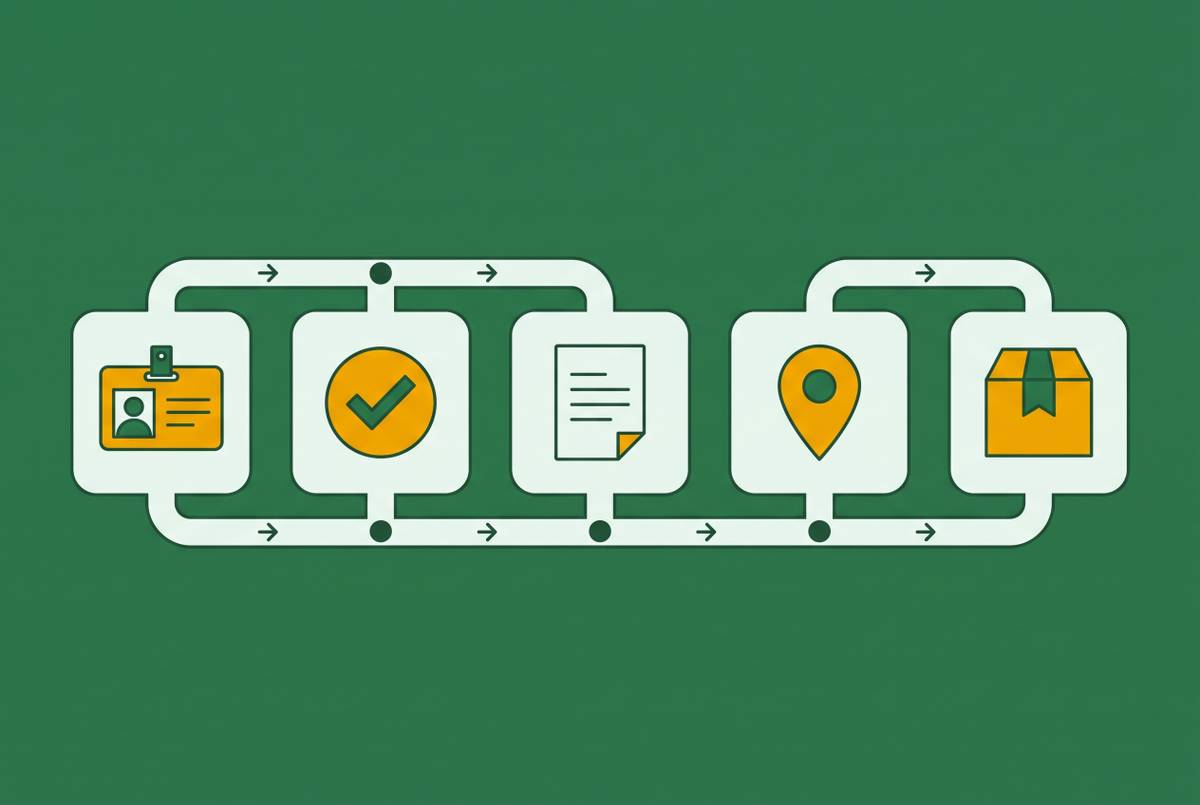
Onboarding Dropout Rate Analysis for 1099 Contractor Funnels
Most 1099 contractor dropouts happen during compliance stages, not recruitment.
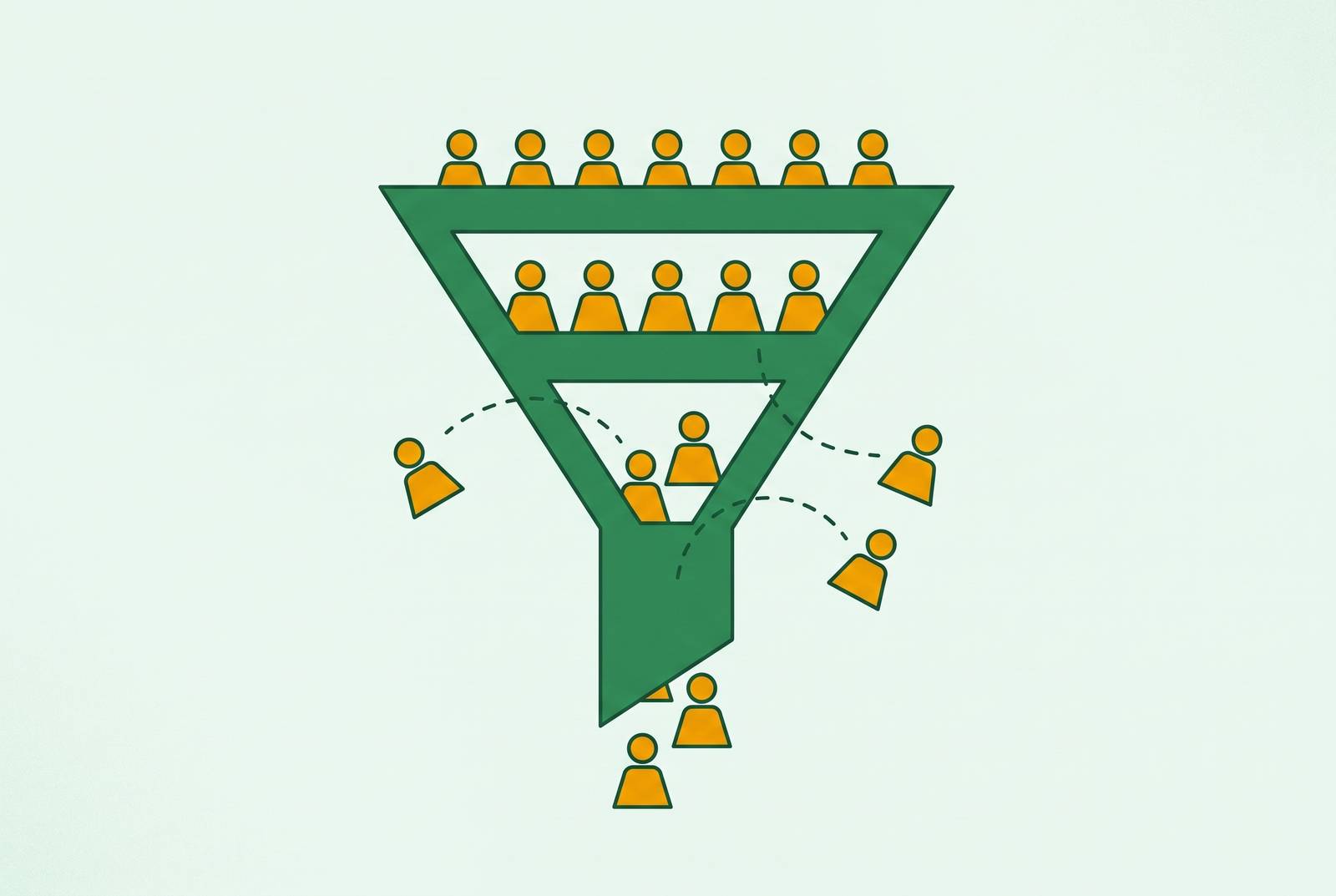
Dropout in 1099 contractor funnels concentrates inside the funnel, not at the top of it. Operators who see their active contractor count stall out tend to reach for the same lever: run more ads, buy more leads, widen the top of the pipeline. That instinct misdiagnoses the problem. The delivery and logistics labor pool is competitive, and iCIMS's 2025 State of Frontline Hiring Report found that across frontline hiring, most candidates who abandon do so after they've already expressed interest, not before they ever looked at the job. For IC networks, the drop runs in a specific sequence, from mobile lead to document upload to identity verification to active hire, with each transition acting as its own leak point rather than part of one smooth decline. That is a map, not a mood. A funnel that loses candidates at the same stages every month is suffering from bad process, not bad luck or a thin labor market. It's suffering from a process with identifiable failure points. That means it has identifiable fixes.
Compliance and credentialing stages unique to contractor funnels
A 1099 contractor funnel carries compliance and credentialing stages a W-2 funnel never has to deal with, and each one is a place a candidate can walk away before their first shift. Standard employment hiring loses people across four stages: application, scheduling, interview, onboarding. Contractor funnels bolt on document collection, identity verification, background checks, insurance enrollment, payment setup, and classification paperwork, on top of the four stages already there. iCIMS's 2025 data shows onboarding alone accounts for close to one in five dropout reports among hiring managers in conventional frontline hiring, and in contractor funnels that share runs higher because the onboarding gate itself is heavier.
A W-2 hire has already accepted an offer by the time HR hands them a stack of paperwork, so they tolerate the friction because they've mentally committed, while a contractor prospect has made no such commitment. Add one more wrinkle most operators underweight: before an operator can issue a 1099-NEC, it has to confirm the worker actually qualifies as an independent contractor under the applicable legal test. That instability underlies everything that follows. The next four sections walk the funnel stage by stage, in the order a contractor actually experiences it.
Stage one: application and first-impression dropout
The application stage bleeds the most candidates in raw numbers, and almost all of that loss is self-inflicted. Appcast's 2026 Recruitment Marketing Benchmarks Report, built from hundreds of millions of clicks, found that only a small fraction of people who view a job posting ever finish an application. The gap between someone clicking a job ad and someone submitting a completed form is enormous, and almost none of it has to do with whether the person was ever a good fit. Among frontline workers who abandon applications, the top reason is that the form takes too long, the second is not knowing whether they even qualify, and the third is missing pay information. None of those three are candidate-quality problems. They're design problems, and design problems are the cheapest ones on this list to fix, because no sourcing or screening dollars have been spent on these candidates yet.
Appcast's data shows applications that take under five minutes convert at a markedly higher rate than longer ones, and the only variable moving that needle is form length. The fix is mechanical: trim the form to the minimum fields needed to route someone to the next step, put earnings range and payment speed above the fold, and push anything deferrable to a later stage where it won't cost a conversion it doesn't need to cost.
Stage two: document collection and identity verification dropout
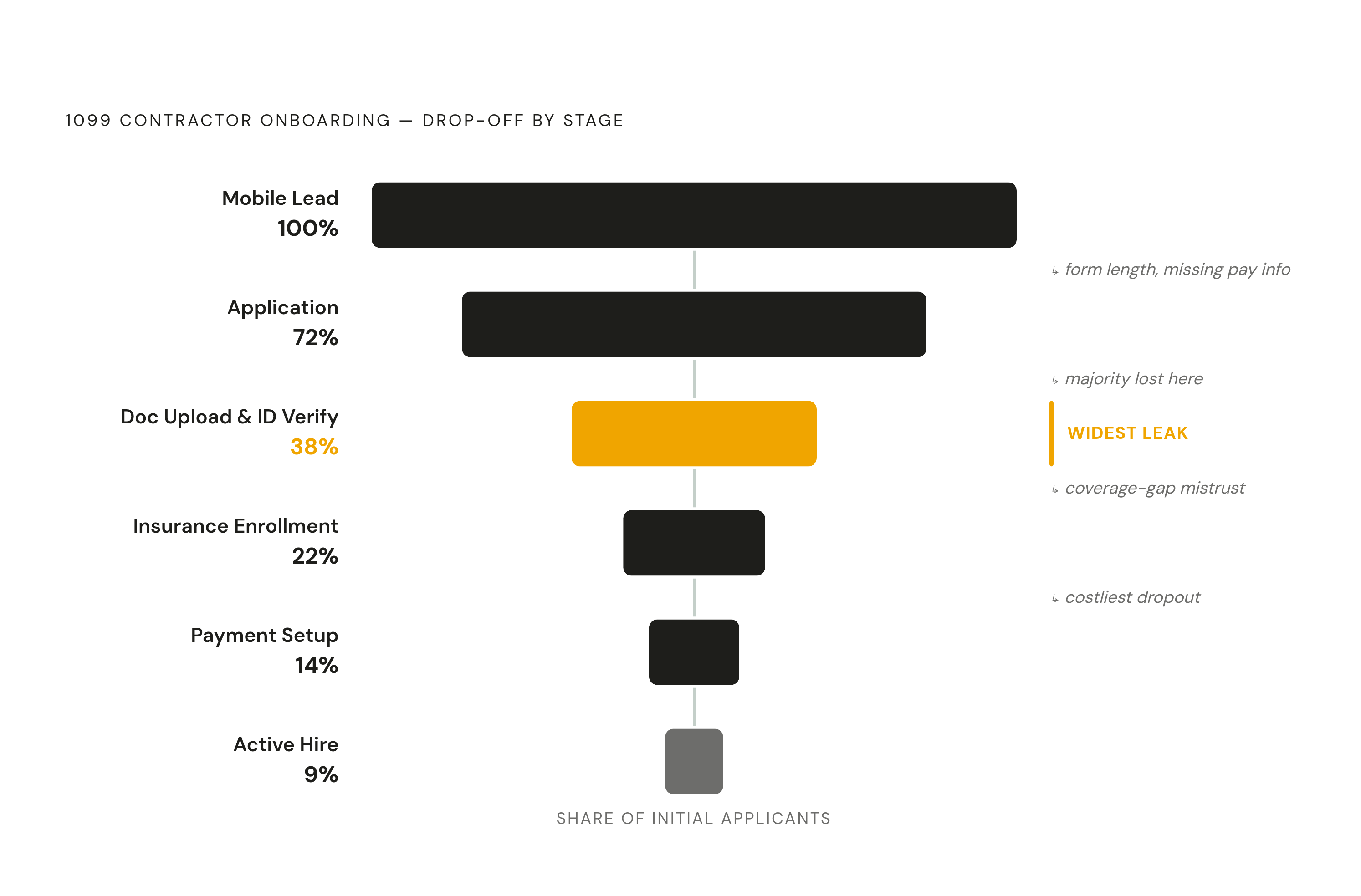
Past the application, the funnel hits its first compliance-specific wall, and the dropout curve gets steeper because the friction changes character. The friction changes character: it is no longer about how long a form takes, but about how complex the process is and how long someone has to wait for an answer. Across contractor funnels, the drop from completed application to cleared identity verification is severe: a majority of people who upload documents never make it to active hire status. That means the compliance gate itself is the leak: candidates aren't getting disqualified at a high rate; they're getting lost in a slow pipe.
Manual credential checks are the mechanism behind that lag. A contractor who submits documents and hears nothing for days reads that silence as rejection, and Criteria's 2024 data found a third of candidates conclude they've been ghosted after just one week of no update, a problem made worse because contractor funnels rarely send proactive status messages. Verification now has to confirm not just that a candidate passed a background check once at signup, but that the person working today is the same person who passed it, a bar most onboarding processes haven't caught up to. A one-time, document-at-onboarding check doesn't answer that question, and this is the tension the rest of the piece returns to: speed and compliance pull in the same direction here, not opposite ones, because the manual process that frustrates candidates is the same process too thin to catch ongoing risk.
Stage three: insurance enrollment and coverage-gap dropout
Insurance is the blind spot most operators don't know they have. When coverage gaps go uncommunicated, or get mentioned only in passing, risk-aware contractors treat the silence as a red flag, and in delivery and logistics work, where injury and vehicle risk are immediate and physical, that reaction is rational rather than paranoid.
DoorDash's own model shows how the gap gets discovered the hard way. DoorDash provides free occupational accident coverage during active deliveries, but that coverage is injury-only and stops the moment the delivery ends, a detail DoorDash's own documentation states. Left unexplained during onboarding, that gap is exactly the kind of thing a contractor finds out about on their own, usually at the worst possible moment, and the discovery breeds mistrust in the platform rather than acceptance of the policy's actual terms. California has turned this from a trust issue into a legal one: Proposition 22, upheld unanimously by the California Supreme Court in 2024, requires app-based transportation and delivery companies to provide or make available occupational accident insurance. In California, that's a legal requirement, not a nice-to-have mentioned in a footnote. It's an onboarding requirement, and any operator who fails to surface it clearly during enrollment loses exactly the contractors who did their homework before signing up.
Cost transparency closes the loop. Occupational accident insurance for independent contractors generally runs fifty to two hundred dollars per worker per month depending on coverage level, and stating that figure, along with who's actually paying it, during onboarding removes a large chunk of the uncertainty that otherwise festers mid-funnel. The fix is clearer coverage, communicated at the moment of enrollment, so a contractor makes an informed decision upfront instead of discovering the terms of their own risk exposure after they've already started making deliveries.
Stage four: payment setup and pay-speed mismatch dropout
Payment setup is the last gate before a contractor becomes an active, working number in the funnel, and it's the one operators most consistently underestimate, because the candidates dropping out here have already survived every earlier stage. That makes this the most expensive dropout in the entire pipeline: a candidate who quits at payment setup has already consumed sourcing spend, screening time, document review, and identity verification resources, all for nothing.
Most gig workers expect same-day access to their earnings, and operators whose systems default to standard ACH, which settles over several business days, lose those candidates to competitors running real-time rails or push-to-card instead. The available rails aren't interchangeable: RTP through The Clearing House and FedNow settle in seconds, any time of day; Same-Day ACH settles by end of business day; standard ACH takes multiple business days to clear. Picking among them is a retention decision as much as a treasury one.
W-9 collection belongs at this stage too, and it's the hinge between a clean year-end filing and a messy one. Collect it late, and an operator builds a tax-season compliance problem; make it a blocking step without a smooth digital flow, and an operator builds a dropout trigger right now, in the funnel, before the contractor ever delivers anything. A recent change to the 1099-NEC reporting threshold cuts the number of forms operators have to file, but it doesn't touch the W-9 collection requirement or the burden of defending a contractor's classification, and any operator reading the threshold change as license to loosen tax-form collection has misread what changed. Manual payout processes break at scale: a small network can push disbursements by hand, but growth outruns that approach fast, and API or CSV automation is what lets a network absorb more payment volume without adding headcount to the back office. Clearing payment setup is, in the funnel's own data, what "active hire" means. It's the final gate before someone shows up as a working contractor rather than a lead.
Time-to-first-delivery as the metric that integrates all four stages
Four stages, four separate leak points, four separate fixes, but operators don't need four separate dashboards to manage them. Time-to-first-delivery, the elapsed time between a contractor's first expression of interest and their first revenue-generating assignment, captures all of it in one number. Every stage adds delay between those two points, and the cumulative delay is the entire leak map expressed as a single figure an operator can track month over month.
Tracking the average without the breakdown is close to useless. An operator who knows overall time-to-first-delivery but not how much of that time sits at document upload, identity verification, insurance enrollment, or payment setup can't tell which gate to fix first. Stage-level timing data is the actual diagnostic tool. Automation at each gate, digital document collection, real-time credential verification, transparent insurance enrollment, and instant payment setup, compresses the elapsed time and removes the wait-induced abandonment driving a large share of mid-funnel dropout. The parallel to customer onboarding research holds up well: most CS leaders lack real-time visibility into onboarding progress, so they only find out which stage caused a delay after the customer has already churned. Applied to a contractor funnel, the same visibility gap costs operators contractors they never see leave until the monthly numbers come in low. This is a cost argument, not just a retention one: a faster time-to-first-delivery means more contractors reach the revenue-generating stage for every dollar spent sourcing them. That single number is also the one operators can be tempted to chase too aggressively, raising the one objection that matters.
The objection: faster onboarding can create compliance exposure if friction is removed indiscriminately
The strongest pushback to everything above is straightforward: strip friction out of onboarding fast enough, and an operator can strip out the parts of the process actually doing compliance work, not just the parts annoying candidates. That's a fair concern, and it would be a damning one if speed and compliance were actually opposed here. They aren't opposed: the objection only holds if an operator can't tell a step that protects against misclassification risk from a step that's just slow because nobody automated it.
Compressing time-to-first-delivery doesn't mean skipping the classification analysis; it means not making the candidate wait days for a manual reviewer to get to it when the same analysis could run in near-real time against the same six-factor economic realities test. Identity verification is the clearest case: the fix isn't to verify less, it's to verify continuously, so eligibility stays current without a human re-checking a file every time a contractor logs back in. Insurance disclosure works the same way: surfacing coverage terms earlier and more clearly doesn't weaken the compliance posture, it strengthens it, because a contractor who understood the coverage terms at signup is a contractor who can't later claim they didn't know what they were agreeing to. Slow manual processes standing in for compliance work rather than doing it create friction that should be removed. The actual verification, the actual disclosure, the actual classification test are friction worth keeping, each one just run faster and with better visibility into where it's sitting in the pipeline at any given moment.