Parallel Workflow Architecture That Cuts 1099 Driver Activation Time Without Sequential Bottlenecks
Parallel workflows let last-mile operators activate 1099 drivers in days instead of weeks.
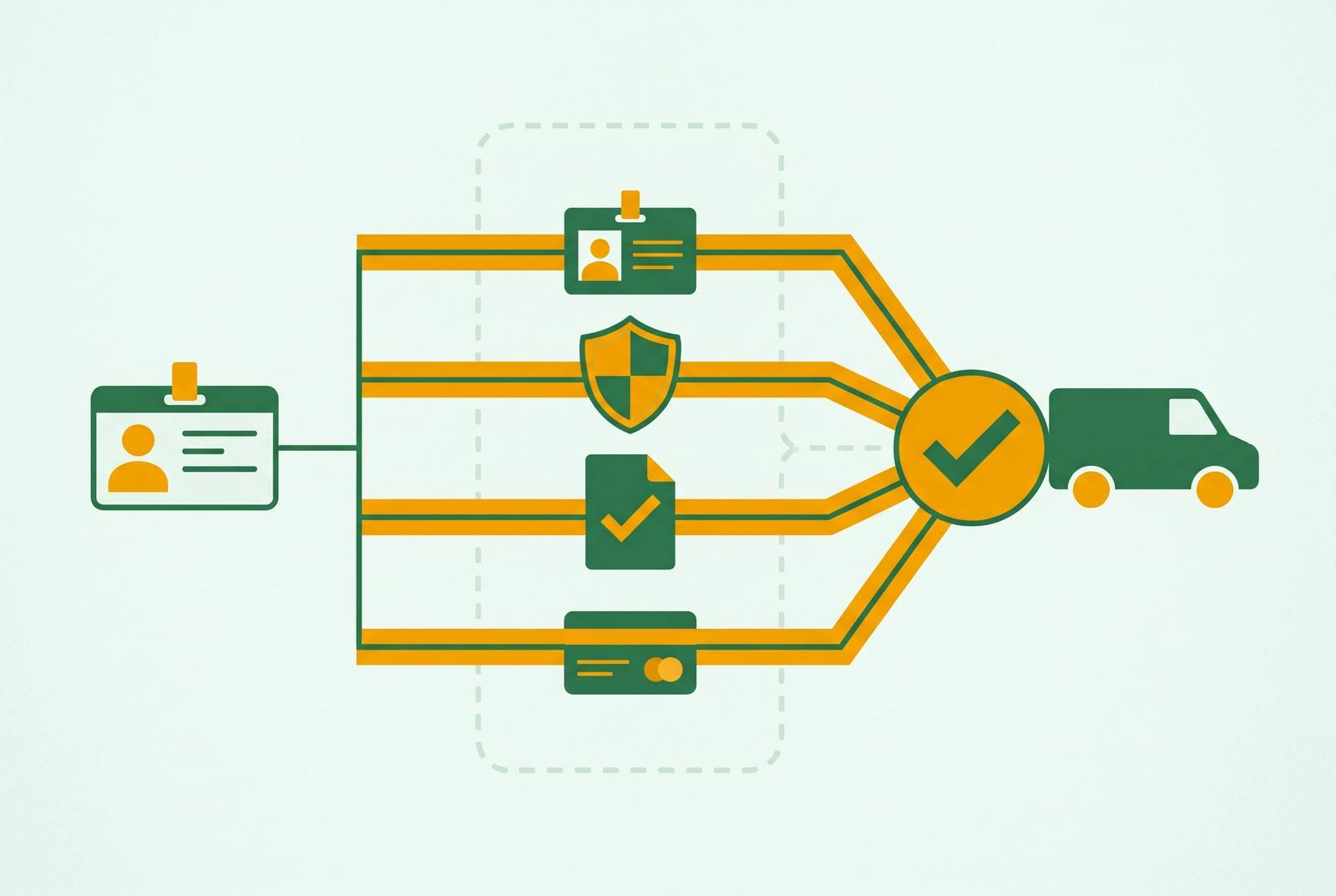
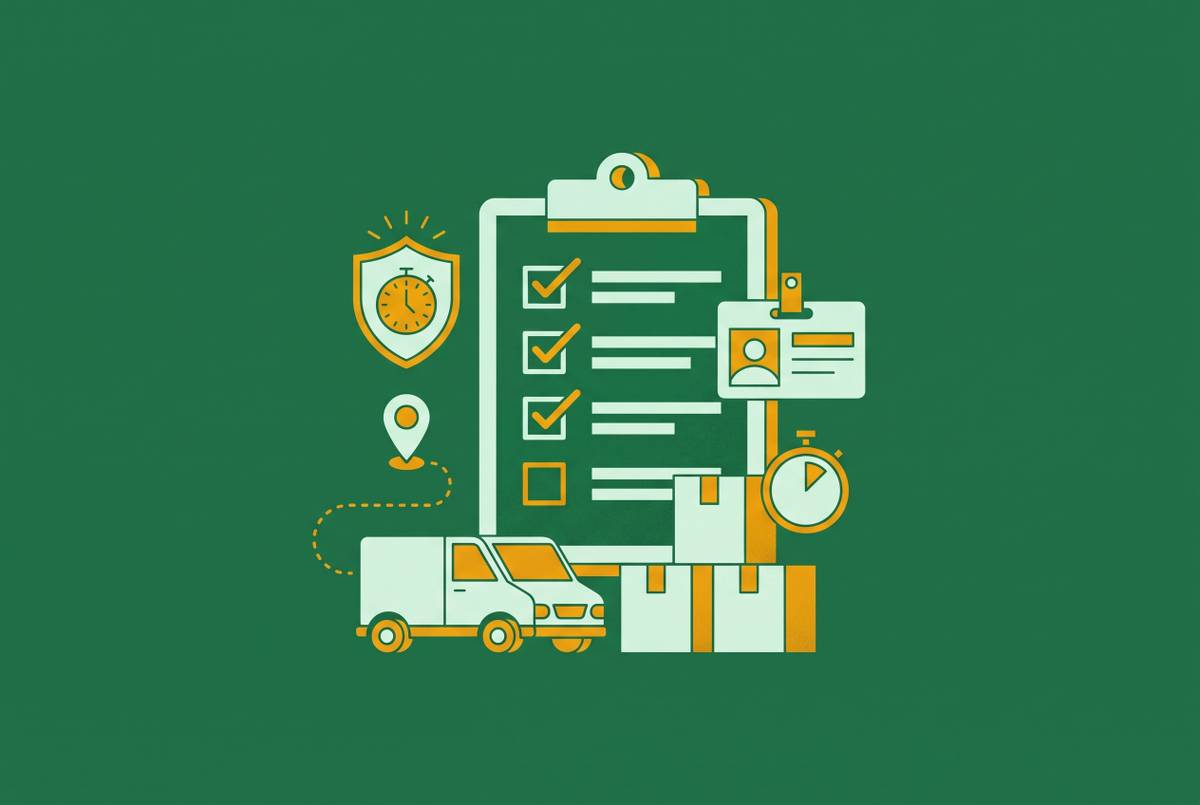
Last-mile delivery companies can shorten contractor onboarding by running independent checks and setup tasks at the same time, while giving each task the time it needs. Parallel workflow architecture can cut 1099 driver activation from weeks to days by taking out the wait between hand-offs while keeping the required verification, classification records, and dispatch gates.
Why the sequential dependency chain — not any individual check — is the true source of slow 1099 activation
A qualified driver agrees to join on Monday. By Thursday, the driver has accepted a faster offer while the paperwork sits in someone’s inbox. That can happen even when the verification service works at its usual speed. All it takes is a workflow where nobody starts the next task until somebody finishes the last one. The inbox has become an unofficial competitor.
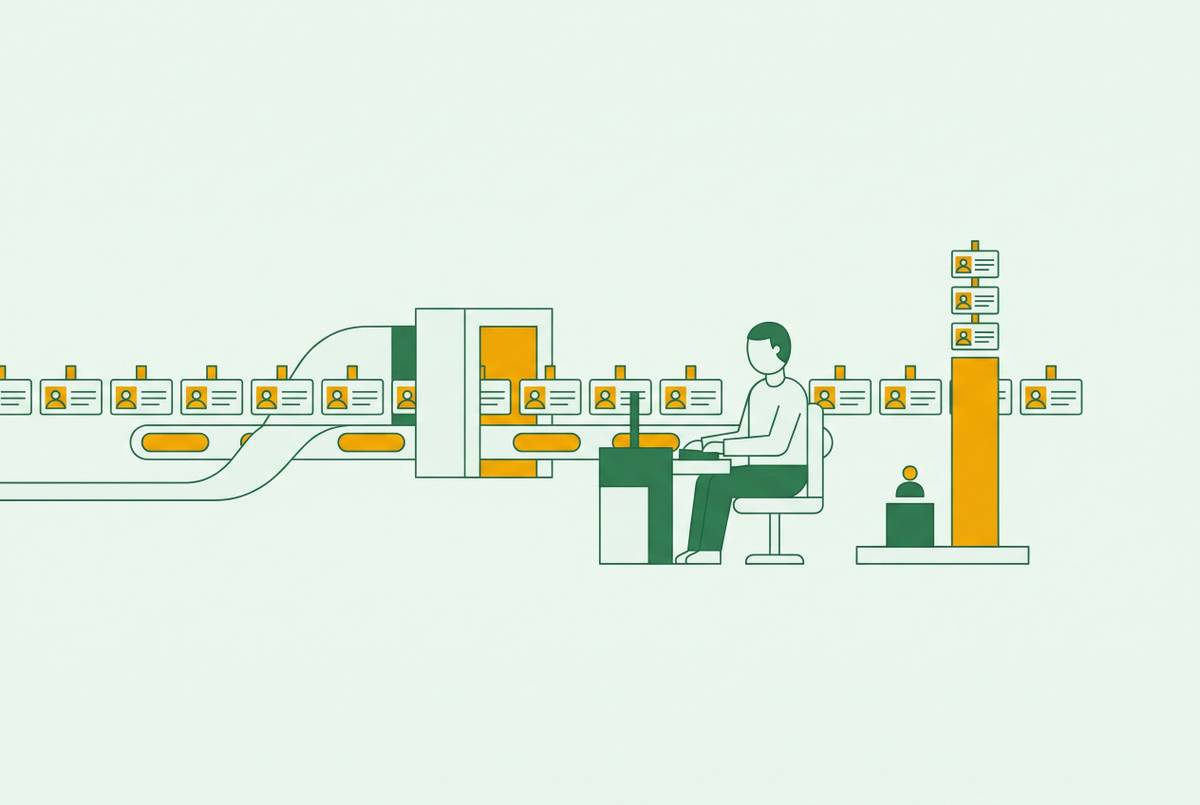
Most of the delay sits between actual work. Paper forms wait to be re-entered, completed checks wait for review, and status stays invisible to the person who could intervene. A faster check takes less time to run but leaves those queues in place. False dependencies cause the delay: one task waits for another even though its work does not require the other task’s result. That distinction separates a quicker version of the same process from a genuinely shorter activation pipeline.
The six stages where activation time actually accumulates and where the idle time hides
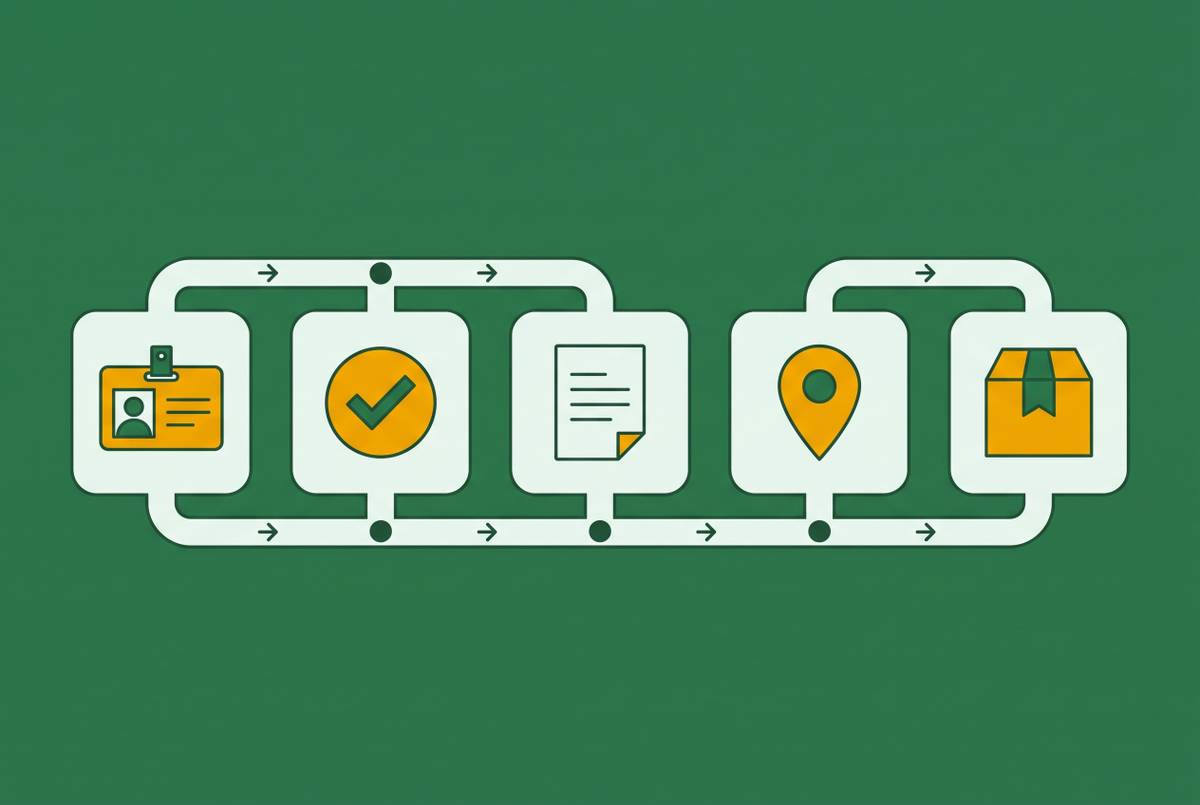
Locus’s 2026 breakdown identifies six stages, namely credentialing and compliance, systems provisioning, driver app activation, territory and route familiarization, supervised execution, and release to independent routes with scorecard baselining. Credentialing loses days when the motor vehicle record, or MVR, Clearinghouse query, background screening, and medical certification begin serially. Paper forms have to wait in another queue before their contents reach the system. Provisioning then repeats the pattern across HR, payroll, TMS, dispatch, and the driver app. Each separate setup adds another hand-off that someone has to wait for.
An emailed login, training manual, and classroom session leave the app doing little of the activation work. Territory familiarization and supervised execution take longer when practical route knowledge lives only in veterans’ heads. At release, the delay is often limbo rather than workload, because no defined performance threshold closes onboarding. Across the six stages, finished work fails to start the next task, so a compliant driver is left without system access or an activated app is left without an assigned route.
How do you speed up driver onboarding without weakening compliance?
FMCSA enforcement is getting stricter, and incomplete files create financial exposure. Speed cannot come at compliance’s expense. Employment history verification, the MVR pull, medical certification confirmation, the Clearinghouse query, and road test or skills verification remain required checkpoints under applicable FMCSA rules. But those rules set timing windows rather than requiring every check to wait for the previous one. Parallel architecture removes artificial ordering while preserving each requirement and its deadline.
In provisioning, creating the driver in one system can trigger creation across HR, payroll, TMS, dispatch, and the app through pre-built integrations. Digital intake collects documents once, tracks deadlines automatically, and exposes check status to the onboarding owner.
Returning seasonal drivers make the distinction concrete. Retaining standing files and updating what has changed, including a fresh MVR pull, new Clearinghouse query, and current drug test, can reduce a one-to-two-week process to two to three days. The required verification remains intact. What disappears is the unnecessary reconstruction of work already on file.
How candidate drop-off during a slow pipeline translates into a structural capacity problem at scale
Driver turnover in fast-moving e-commerce logistics is often more than 100% a year. An operator can therefore spend substantial effort onboarding simply to maintain headcount. When qualified applicants leave because the pipeline is slow, that work to replace drivers yields fewer drivers who can take routes. Gig drivers apply to competing platforms at the same time, so when verification and contract signature take more than a few days, faster operators have a chance to win them over. The loss appears on the dispatch board when peak-season capacity is needed.
Time-to-productivity measures both the capacity available to the operation and the work of HR. Activation in days rather than weeks lets an operation absorb hiring surges, recover from churn, and enter new territories without service degradation. Slow onboarding constrains those choices before route planning begins. The back office becomes a capacity bottleneck.
Scale makes informal coordination especially fragile. A coordinator may hold the status of a few dozen drivers in memory, but several hundred require a process that does not depend on recall. Stage owners, parallel credentialing, cohort-based training, and a shared view of the pipeline let the operation manage replacement hiring without having to keep searching through messages.
The compliance exposure that parallel speed without a classification framework creates
Faster onboarding also multiplies the consequences of weak classification records. Distinct digital contractor qualification files, separate vendor agreements, and non-mandatory training records support the independent contractor defense during Department of Labor or IRS wage audits. Without them, a compressed process can produce more incomplete files in less time. Speed is not a classification framework.
The Department of Labor proposed rescinding its 2024 independent contractor rule in favor of a more employer-friendly economic-reality test. A final rule could be issued only after review of public comments submitted through April 28, 2026. The proposal itself does not settle the question. State law also shapes these rules, with major changes passed in Kansas and Washington in 2026 and Minnesota’s major overhaul made law in 2024.
Kansas House Bill 2602, signed into law in April 2026, allows money to be paid into portable benefits accounts without those payments counting as evidence of employment. That changes what a compliant contractor relationship can include, but does not remove the need to document classification. The classification track needs to be built into intake from the start. It is unsafe to leave files put together during onboarding to be cleaned up after activation.
How real-time credential monitoring extends parallel architecture past the activation moment
Activation records establish a condition at a particular moment. They do not establish that condition forever. A personal auto policy can lapse, or a license can be suspended months after the driver starts, exposing the carrier to vicarious liability. Periodic audits leave a blind interval between the change and its discovery. That is the ongoing-compliance version of work waiting unseen in an onboarding queue.
Real-time monitoring keeps the same architecture at work after the driver is first approved. A suspended license caught automatically before a driver takes a route, with automated lockout, turns a hidden change into an operational gate. The pipeline dashboard also needs to show which active contractors have credentials expiring in the next 30 days.
This becomes harder as replacement hiring and active-fleet monitoring overlap. Spreadsheet tracking cannot sustain both at scale without staff devoted to chasing expirations. Automated monitoring makes compliance an ongoing state that the operation can see, rather than a hiring-day conclusion it hopes remains valid.
Where pay speed fits into the activation architecture and why it is a retention variable, not a payroll afterthought
A courier pays for fuel and parking before delivery income arrives. That gap can undermine retention even when activation itself is fast. Contractors unable to absorb it can move to platforms that close it sooner. Pay configuration belongs in the activation architecture so that payroll setup is finished before the first route is complete.
The distinction between payment rails has an immediate operational consequence. RTP and FedNow settle funds in seconds, 24/7/365, while Same-Day ACH operates only on business days. A Saturday payment routed over Same-Day ACH is not instant. Representing it that way creates support tickets when the money does not arrive until Monday. Accurate payment expectations are part of the service.
Reporting settings require attention as well as settlement speed. The 1099 reporting threshold increased from $600 to $2,000 for payments made on or after January 1, 2026. Platforms calibrated to the former threshold need reconfiguration before the February 1, 2027 filing deadline. For operators preparing in late 2026, that is a concrete back-office automation task.
What the fully parallel 1099 activation model looks like when all tracks run simultaneously
The six-stage model does not disappear under parallel architecture. Digital intake launches MVR, Clearinghouse, background, and medical certification checks while one record creation triggers provisioning across the operating systems. Classification documentation takes shape in the same intake flow, including the contractor file, vendor agreement, and non-mandatory training records. Payment preference, W-9 or equivalent documentation, and rail selection are captured before the first route.
App activation uses a phone number and one-time passcode, while guided first-route execution shifts instruction into the app. This restructures the third stage and supports territory familiarization and supervised execution, while route experience remains necessary. Platform-side route encoding replaces dependence on knowledge held only by veterans. Drivers can learn through guided repetition once the required gates permit execution.
The necessary dependencies remain visible at the convergence point. Dispatch eligibility depends on the required clearances, and release to independent routes still depends on the defined performance threshold. Credentialing, provisioning, app setup, classification documentation, and payment configuration can nevertheless proceed together. Full activation means those tracks are complete when needed.
How to build pipeline visibility that keeps parallel tracks from drifting out of sync
Parallel work introduces a coordination risk of its own. One track can finish while another remains unresolved, leaving a credentialed driver without provisioning or an activated app without a route. Simultaneous starts do not guarantee coordinated finishes. Without shared status, the old hand-off problem returns as a synchronization gap.
For the operator building this process, the management requirement is a single dashboard showing every hire across every track. It needs to distinguish completed work from pending work for each contractor and cohort, rather than relying on status emails or a shared spreadsheet. Named stage owners remain necessary because visibility does not assign responsibility by itself. Automated transitions then connect completion to the next permitted action, such as triggering dispatch eligibility when credentialing clears, rather than waiting for a coordinator to update a record.
Cohort-based onboarding gives surge hiring a practical unit of oversight. The owner can see where a group is progressing and where it is stalled without inspecting every file separately. At the other end, weekly scorecard visibility from day one and a defined, sustained performance threshold formally close onboarding. Coaching then addresses any remaining gaps, so the activation record can close.
Choosing the platform infrastructure that can run and sustain this architecture across a growing contractor network
Platform selection follows from the workflow. Digital intake must start checks in parallel, pre-built integrations must set drivers up across systems, and the driver app must help them activate quickly and guide them through the work. Real-time credential monitoring needs automated lockout, while payment configuration needs rails that fit the work and a clear, correct account of when funds will settle. A view of each cohort brings these tools together so the operation can run the process. Disconnected tools can otherwise reintroduce serial work through manual coordination.
Does one intake event start the checks, or must a coordinator start each one separately? Does provisioning cascade automatically, or require setup in every system? Does credential monitoring run all the time, or does it rely on manual pulls? Is rail selection captured during intake, or postponed to a separate payroll process?
The decisive scale test is whether the system can handle thousands of contractors without proportional growth in manual back-office work. A platform that needs more coordinators to keep its tracks synchronized has transferred the bottleneck to those coordinators. Sustainable activation speed depends on infrastructure that coordinates the movement of completed work between queues as the network grows, leaving people to manage exceptions.