Back-Office Headcount Benchmarks for Scaling 1099 Driver Onboarding Without Adding Staff
Parallel credentialing and self-serve activation eliminate manual work as contractor networks grow.

Scaling 1099 driver onboarding without adding administrative staff requires parallel credentialing, connected systems provisioning, and self-serve driver activation. The headcount trap begins when delivery companies expand an unreconstructed process built for a small fleet. At 50 contractors and at larger scales, the useful benchmark is not a fixed staffing ratio but how much routine work each new driver creates.
Why delivery companies keep hiring staff as they add contractors
A delivery operator has just hired a third back-office coordinator and still feels behind. Each new contractor brings onboarding packets, credential checks, payment records, insurance verification, and compliance filings. Spreadsheets, email approvals, and disconnected payroll tools leave people to move that work between systems. Another coordinator looks like the obvious answer. Yet cost per contractor stays flat or rises, consuming the margin that growth was supposed to produce.
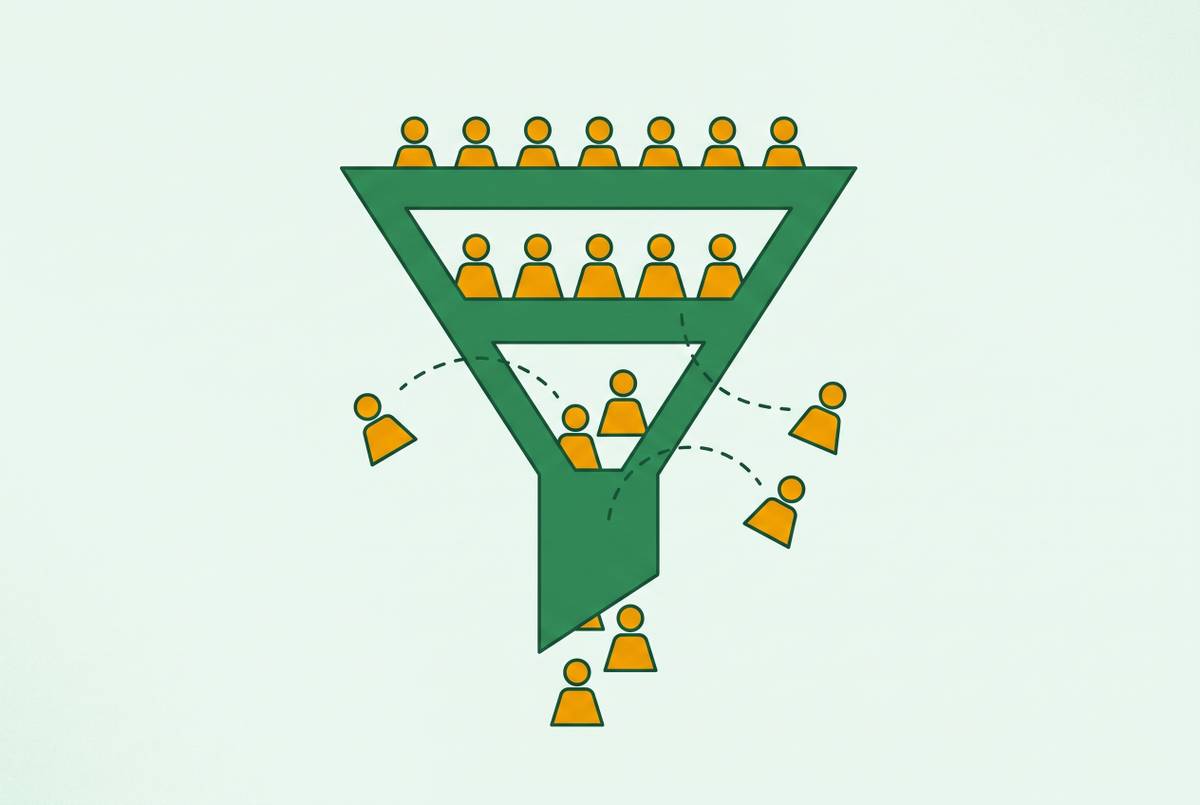
Churn makes the arithmetic less forgiving still. An operation replacing a large fraction of its drivers annually is running a permanent onboarding factory. The active roster can therefore conceal the workload required simply to maintain it. The process still depends on individual attention long after the network has outgrown that attention.
What the back-office load actually consists of for a 1099 driver network
For a 1099 delivery network, onboarding includes the offer flow, W-9 collection, I-9 where applicable, background check initiation, and verification of licenses, vehicle documents, and insurance. Credentialing also means tracking status and providing regulatory training where it is required. Provisioning then creates records in the HR system, payroll, dispatch or transportation management system, and driver app. Without integration, someone has to create each record by hand. Insurance administration also means enrolling drivers in occupational accident insurance and keeping track of their commercial auto and cargo coverage.
The work continues after a driver starts delivering. Compliance monitoring checks that credentials, insurance, and classification posture stay up to date, while payment administration handles disbursements and year-end 1099 filing. These are distinct functions, but disconnected tools turn their shared information into repeated data entry. A document collected once can still generate several administrative steps. That is why counting completed packets understates the load.
Locus’s driver onboarding analysis describes six stages, which are credentialing and compliance, systems provisioning, driver app activation, territory and route familiarization, supervised execution, and release to independent routes. Hidden days accumulate between those stages when checks run serially or provisioning waits for credentialing to close. The useful metric is therefore time-to-productivity. It measures elapsed days from contractor hire through completed paperwork to independent routes at expected performance.
How staffing ratios actually behave at 50 contractors and at larger scales
At 50 contractors, onboarding can run on a coordinator’s attention. One person can hold the pipeline in their head, help each driver activate the app, and arrange pairing with a veteran. Consistency is the first weakness. What the coordinator forgets may have no other checkpoint. Personal control can make the operation look orderly without making the process repeatable.
At larger contractor counts, the workload changes character. With more applicants in the pipeline, staff need to keep the stages connected as the work grows beyond guiding each person through every step. Locus identifies handoff failures such as completed credentialing with provisioning not started, or an activated app with no route assigned. More staff do not automatically expose those gaps. A dashboard showing every driver’s position in the pipeline serves a different purpose from another person answering email.
At the largest scale, manual onboarding becomes structurally untenable at the churn volumes typical of large last-mile fleets. Integration-driven provisioning and self-serve activation must take over the routine work that a coordinator used to do. The platform becomes the mechanism for moving drivers forward. Otherwise, each replacement driver generates another round of setup, follow-up, and reconciliation, even when the active contractor count has not grown.
These thresholds describe how the systems need to work. The supplied benchmarks do not establish a defensible number of administrators per contractor at any of the three sizes. Assigning one would disguise the central variable. A midsized contractor operation with connected provisioning presents a different administrative load from one that re-enters every driver across separate tools. The meaningful comparison is the manual work required to activate and maintain each contractor.
How do you speed up delivery driver onboarding without hiring more admin staff?
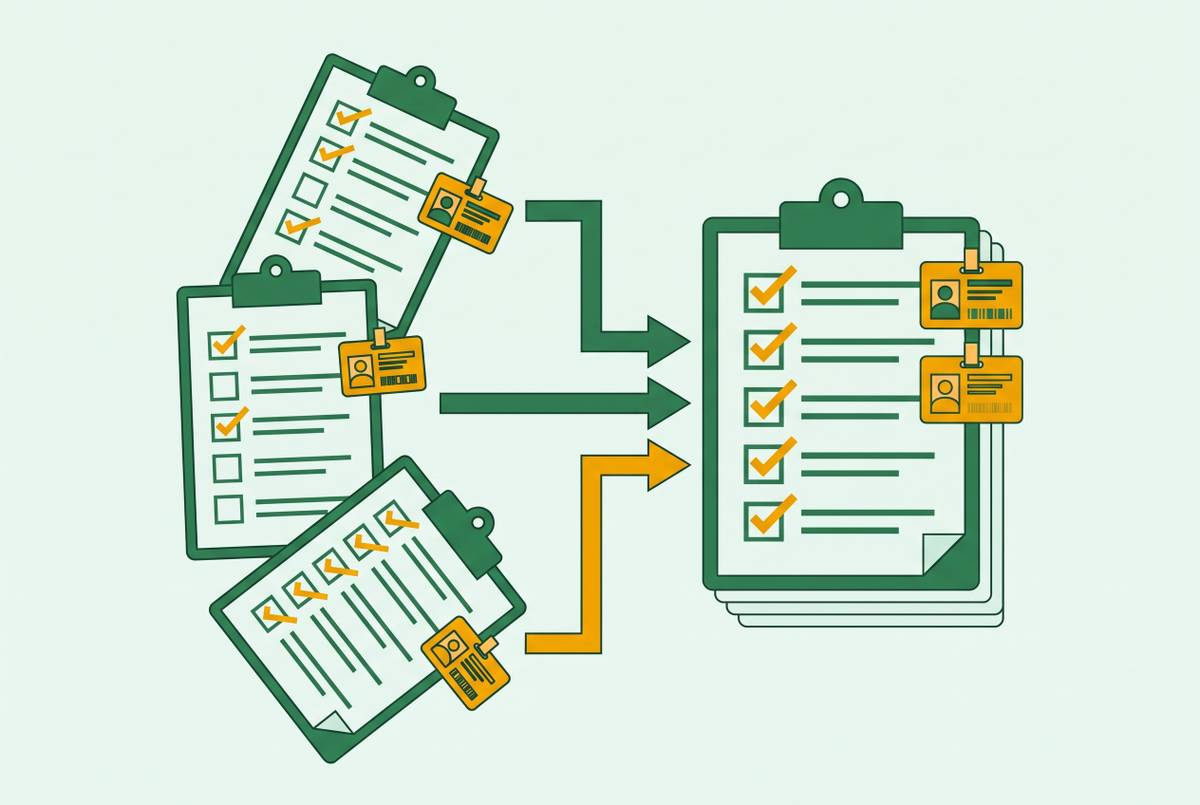
Standardization comes before automation because an ad hoc process has no dependable sequence to automate. The documented flow runs from offer to document collection, parallel checks, payroll record creation, and assignment linkage. Parallel credentialing starts background checks, license verification, vehicle documentation, and insurance confirmation at the same time. This removes waiting built into the sequence. Hiring another coordinator leaves that sequence intact unless the process itself changes.
Creating the driver in the HR system triggers creation in payroll, dispatch, and the driver app through pre-built connectors, eliminating repeated setup across systems. Automated payment processing applies the same principle downstream. Approved timecard data drives the payroll run and matching disbursement from one source, with the W-9 already collected during onboarding. Routine transactions no longer require a person to serve as the connector.
Driver app activation shapes how much a person still has to teach the driver. Locus contrasts activation through an emailed login, training manual, and classroom session with activation through a phone number and one-time passcode, followed by turn-by-turn guidance on the first route. In the second model, the app absorbs work previously handled by a coordinator and veteran driver. That is more than a tidier login screen. It changes where the training load sits, bringing activation closer to productive route work.
The compliance surface that grows with contractor volume — and what it costs to ignore
A larger contractor network creates more credentials, policies, and classification records to monitor. Manual audits leave gaps between reviews, and those gaps are harder to see when records are kept apart. The exposure is not merely operational delay. Networks that work in more than one state also face different state classification tests, so a process that fits one state may not fit another. Volume magnifies the cost of treating compliance as an occasional paperwork exercise.
The U.S. Department of Labor proposed major classification changes in late February 2026 that would rescind the 2024 rule and restore emphasis on two core factors. Those factors are control over the work and the worker’s opportunity for profit or loss. The late-2026 regulatory picture is not one settled document. The regulation on the books, the Wage and Hour Division’s enforcement position, and the proposal require separate tracking. A proposed change is not a substitute for understanding the operative rule.
Reporting changes create another workflow adjustment. The reporting thresholds for 1099-MISC and 1099-NEC rise substantially beginning in 2026, while the obligation to maintain detailed contractor records continues. Misclassification presents a much steeper financial risk. FLSA exposure includes back wages plus equal liquidated damages, while IRS penalties for willful misclassification include a percentage of wages and full employer and employee FICA, with potential criminal liability in the most egregious cases. Continuous monitoring addresses the volume of records that must be maintained, though automation is not itself a classification judgment.
Insurance architecture for 1099 driver networks and why it belongs in the onboarding workflow
Insurance verification belongs in the first credentialing stage, before contractor activation, with procurement integrated into onboarding. Coverage must be current when the driver starts. When verification sits outside the onboarding sequence, it becomes another manual checkpoint that can delay activation or leave a compliance gap. California’s Prop 22 requires occupational accident insurance for app-based delivery. The California Supreme Court upheld Prop 22 in July 2024 in Castellanos v. State of California.
Commercial auto liability leaves the cargo being transported uncovered, so it is easy to overlook the cargo insurance the network needs. The parcel is not the vehicle. Occupational accident insurance introduces a different trade-off because it lacks the exclusive-remedy shield provided by workers’ compensation, so covered contractors can in some circumstances still sue the platform. Operators should understand that distinction before selecting coverage, while bulk purchasing through a platform that aggregates contractor-network demand offers a way to reduce unit costs for occupational accident and commercial auto coverage.
Pay speed as a retention mechanism and back-office infrastructure requirement
Pay speed connects retention directly to the onboarding workload. Contractors choose platforms in part by how soon they can get their earnings, and may choose a lower per-delivery rate with instant access over a higher rate paid through weekly ACH. Slow payment can therefore feed churn. That sends replacement demand back into the same onboarding process the operator is trying to compress. Payment infrastructure also shapes how much onboarding work the operator needs to plan for.
RTP and FedNow settle in seconds at any time of day, every day of the year, while Same-Day ACH works within business-day windows. Standard ACH remains the legacy default but becomes a retention disadvantage when competing on access to earnings. Faster rails alone cannot clear every obstacle. A missing W-9 can hold the first disbursement, so automated collection during onboarding connects payment readiness to activation, supported by proper contractor classification and documentation.
What a back-office built for scale actually looks like at each contractor threshold
For an operator designing around 50 contractors, the practical model begins with a documented sequence that makes the steps independent of a coordinator’s memory. The documents, checks, system setup, and assignment go through the same steps each time. The coordinator can still provide personal help within a workflow that defines what must happen before a driver reaches independent routes. This creates a repeatable foundation for the next threshold without pretending the smallest operation needs the same machinery as the largest.
As fleets grow beyond the smallest scale, pipeline visibility and connected handoffs become central. A shared system of record reduces double entry, parallel credentialing removes serial waiting, and integrated provisioning connects driver records across operational tools. The dashboard makes stalled stages visible. App activation also needs to absorb more of the guidance that was manageable through personal instruction at smaller scale. The operational unit is now the pipeline.
At the largest scale, routine activation and monitoring need to operate without proportional additions to staff. The system relies on self-serve app activation, integration-driven provisioning, automated payment flows, and continuous compliance monitoring. Agentic dispatch and operations platforms also take on the routine work of handling exceptions, communicating with customers, and making dispatch decisions. This addresses the next constraint, which is supporting growing order volume after drivers become active.
When to rebuild the back-office architecture and what to prioritize first
The right time to rebuild is before the next threshold. Two signals make the need particularly clear. Back-office headcount is growing faster than contractor volume, or new drivers take weeks to reach expected productivity, stretching the timeline beyond days. For an operator already under pressure, the first priority is a single system of record that eliminates double entry across applicant tracking, payroll, and dispatch. Other automation depends on information being entered once and flowing downstream.
The second priority is parallel credentialing, which attacks hidden onboarding days directly. Third comes integrated payment infrastructure that collects the W-9 during onboarding and can make a same-day or instant disbursement. Fourth is replacing periodic checks with continuous monitoring of credentials, insurance, and classification posture. This sequence connects speed with operational readiness. It avoids compressing one stage only to leave the contractor waiting at the next handoff.
Automation can still create a new key-person dependency if only the coordinator who configured it understands how it works. Documented workflows and standardized platform logic reduce that risk, unlike custom configurations known to one person. For a 1099 delivery network, the back office is the production line that turns applications into active, compliant, insured, paid drivers. Rebuilding that line allows contractor growth to improve margins while containing the cost of an expanding administrative queue.